
The communications landscape has evolved dramatically over the past decade. While traditional media relations remain a cornerstone of public relations, influencer relations have emerged as a powerful channel for brands seeking to engage audiences in more authentic and targeted ways. Today, successful PR strategies often combine both approaches to maximize reach, credibility, and impact.
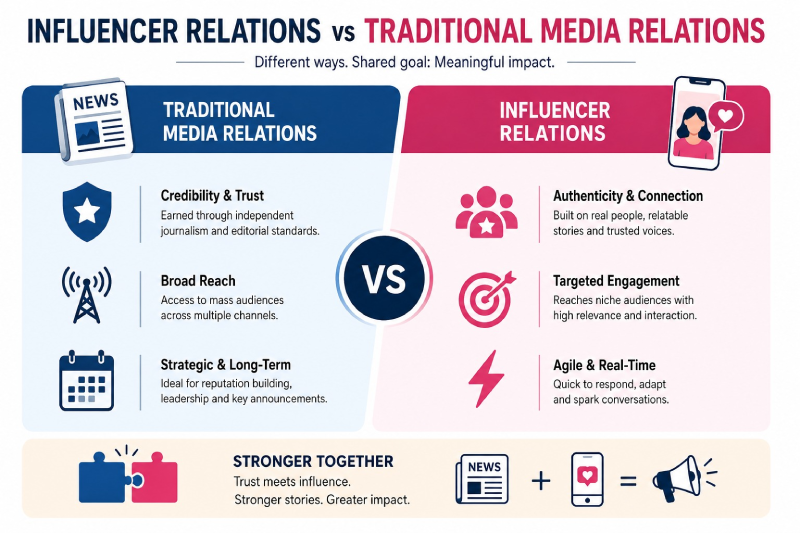
Traditional media relations focus on building relationships with journalists, editors, and media outlets to secure earned coverage. This approach relies on editorial judgment, newsworthiness, and journalistic standards. When a story is featured in a respected newspaper, television channel, business publication, or trade magazine, it carries a level of credibility that stems from independent reporting and editorial validation. Traditional media is particularly effective for corporate announcements, executive thought leadership, crisis communications, and reputation management.
Influencer relations, on the other hand, center on collaborating with content creators who have built engaged communities across social media platforms. Influencers connect with audiences through personal experiences, authentic storytelling, and niche expertise. Their recommendations often feel more relatable and accessible, making influencer partnerships especially valuable for product launches, lifestyle campaigns, brand awareness initiatives, and community engagement.
One of the key differences between the two approaches is audience engagement. Traditional media typically delivers broad reach and institutional credibility, while influencers provide highly targeted access to specific audience segments. A feature in a leading publication may enhance a brand’s authority, whereas an influencer campaign can spark conversations, generate user engagement, and drive immediate action.
The speed of execution also differs. Media relations often require longer lead times due to editorial processes and publication schedules. Influencers, however, can respond quickly to trends, create content rapidly, and engage audiences in real time. This agility makes influencer relations particularly effective in fast-moving digital environments.
Despite their differences, influencer relations and traditional media relations are not competing disciplines. Instead, they complement each other. Traditional media helps establish trust and long-term reputation, while influencers add authenticity, engagement, and audience relevance. Together, they create a balanced communications strategy that strengthens brand visibility and credibility.
As media consumption habits continue to evolve, organizations that successfully integrate both influencer and traditional media relations will be better positioned to build meaningful connections, amplify their stories, and achieve lasting communications success.
Search
Newsletter
Get PR insights delivered to your inbox.